
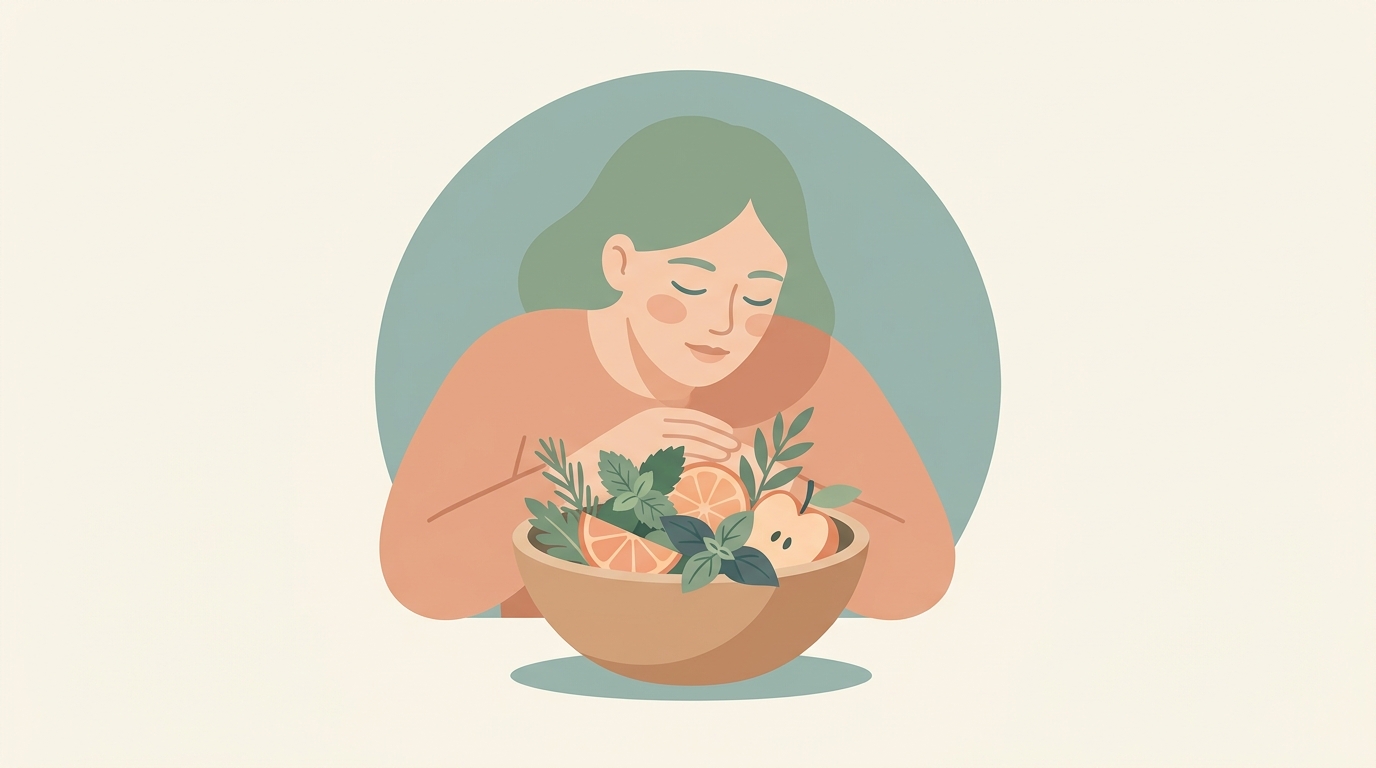
Of all the benefits of quitting, this is the one that arrives soonest and gets noticed most. Blood pressure and lung function improve invisibly. Taste and smell announce themselves, sometimes within forty-eight hours, and often in ways nobody warned you about.
The damage smoking does here is not permanent, which is why the recovery is so fast. Smoke dulls the olfactory receptors high in your nose and blunts the taste buds on your tongue, partly through direct irritation and partly by coating everything in a film of tar and residue. Taste buds are among the fastest-renewing cells in the body, turning over roughly every week to ten days, so a fresh set arrives quickly once the smoke stops. Olfactory nerve cells regenerate too, though more slowly — most of the improvement lands in the first few weeks, and it keeps quietly sharpening for months.
The first thing most people notice is not a nice smell. It is smoke. Your car smells like an ashtray. Your winter coat smells like an ashtray. So does the corridor outside the office, and so, unmistakably, do the people you used to stand outside with. This is disorienting because none of it smelled like anything a week ago, and it can feel like the world got dirtier when actually your nose came back online. Do not rush to scrub all of it away. That reaction is genuinely useful — it is the first time in years that your own body has given you a straightforward reason to find smoking unappealing, and it does more for a shaky quit than most affirmations.
Food is stranger. Some things become wonderful: fruit, herbs, anything with a delicate flavour you had been steamrolling. Other things become too much. Sweet things often taste sweeter than you want them to, and food you used to like can taste oddly strong or slightly wrong for a few weeks while your palate recalibrates. Coffee frequently tastes different, sometimes worse, which catches people off guard. Beer and wine change too. None of this is permanent; it is a system finding its level after years of being turned down.
Need help right now?
If a craving feels strong, send a support request and we’ll connect you with an available supporter.
There is an honest connection to weight worth naming, because it is easy to be told only the cheerful half of this. Food becoming genuinely more rewarding is one of the real reasons people eat more after quitting. That is a separate mechanism from the metabolic slowdown that also happens, and it is the one you have direct influence over. Knowing in advance that everything is about to taste better is a fair warning that portion sizes and snacking can drift upward without any decision being made.
The better use of the window is to treat it as a reset. Foods you had written off as bland are probably not bland; you were simply tasting them through smoke. It is a genuinely good few weeks to cook properly, eat things you had stopped bothering with, and find out what your food has actually tasted like all along. Some people find their preferences change for good — less salt, less sugar, more interest in anything aromatic.
If your sense of smell does not improve at all after several weeks smoke-free, that is worth mentioning to a doctor, since long-term smoking is not the only thing that dulls it and other causes are treatable.
Otherwise, enjoy it. Most of what quitting gives back is statistical and slow — risk curves bending downward over years. This one is immediate, obvious, and yours within the first week.