
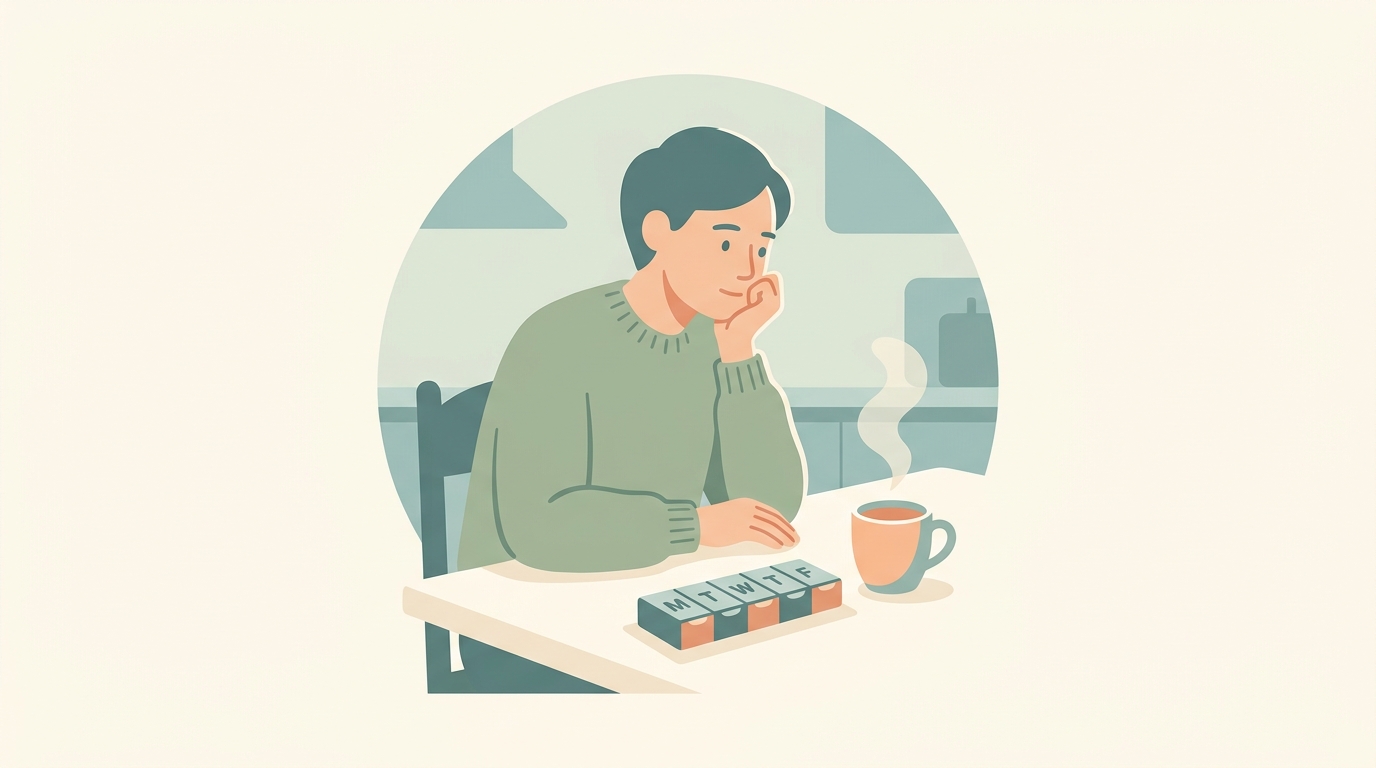
This is the part of quitting that almost nobody is told about, and for a small number of people it matters a great deal.
Cigarette smoke speeds up one of the enzyme systems your liver uses to break down drugs. The enzyme is called CYP1A2, and smoking makes your body produce more of it. More enzyme means certain medications are cleared out of your blood faster than the dose assumes. If you have been smoking while taking one of those medications, your dose was effectively calibrated to a body that was clearing the drug quickly.
Stop smoking and that speed-up unwinds over roughly one to two weeks. The enzyme level falls back toward normal, the drug is cleared more slowly, and the same dose now produces a higher level in your blood than it used to. Nothing about the prescription changed. Your metabolism did.
The single most important thing to understand is that this is not caused by nicotine. It is caused by other compounds in the smoke, particularly the polycyclic aromatic hydrocarbons produced by burning tobacco. That distinction has a real consequence: switching to patches, gum, lozenges or pouches does not keep the effect going. Nicotine replacement gives you the nicotine without the combustion, so the enzyme comes down anyway. People sometimes assume that staying on nicotine keeps everything else stable. It does not.
Need help right now?
If a craving feels strong, send a support request and we’ll connect you with an available supporter.
The medications where this matters most are ones with a narrow margin between a working dose and too much. Clozapine is the clearest case, and the effect is large enough that psychiatric services have formal protocols for it — blood levels can rise substantially after quitting, and dose reduction is often needed. Olanzapine behaves similarly, if less dramatically. Theophylline, used for asthma and COPD, is another, which is an unfortunate combination given how many people with those conditions are trying to stop smoking. Some other psychiatric medications are affected to a lesser degree.
The effect on warfarin is less direct but worth mentioning, because anticoagulation is another area where small shifts matter and monitoring already happens. If you are on warfarin, tell whoever runs your monitoring that you have stopped.
Then there is caffeine, which is not a prescription but catches far more people. Caffeine is cleared by the same enzyme, and smoking roughly doubles the rate at which you get rid of it. Quit, and your usual coffee starts behaving like a much stronger one. This is why so many people describe feeling jittery, anxious and unable to sleep in the first couple of weeks after stopping, and then blame it entirely on withdrawal. Some of it is withdrawal. Some of it is that you are now getting the full effect of coffee you had trained yourself to drink at double strength. Cutting your intake by about a third to a half for the first few weeks removes a symptom people often mistake for their nerves falling apart.
What to actually do with this is simple. If you take any regular prescribed medication, mention your quit date to your prescriber or pharmacist before you stop, not after. Ask specifically whether any of what you take is affected by smoking status. A pharmacist can answer this in a couple of minutes and will not find the question strange — it is a known interaction, just an under-communicated one. If you are on clozapine or theophylline, this is not optional; those need active monitoring around a quit.
Do not stop or reduce any medication yourself because you have read this. The direction of the change is upward, which means the risk is having more drug in your system than intended, and the response to that is a measured dose adjustment made by the person who prescribed it, not a guess made at home.
None of this is a reason to keep smoking. It is a reason to spend five minutes on a phone call first. The interaction is entirely manageable when someone knows it is coming, and only becomes a problem when a dose quietly stops fitting and nobody connects it to the fact that you stopped smoking three weeks ago.